

What to Sell in Palworld: the Best Items for Gold
Updated: 2026-08-01
The short answer
Merchants buy almost anything, but what they pay varies wildly. The spread runs from three gold per kilogram of cargo to several hundred, so picking the right product matters more than the number of trips.
From level 50 the answer is simple: the Crude Oil Extractor and crude oil, because it pumps with no input from you at all. Until then it is cloth from the ranch. And anything that drops from Pals with "Precious" in the name goes straight to a merchant: it weighs nothing and needs no crafting.
Below is why, with numbers straight from the game tables: what an item is worth, how much Pal labour it eats and what that adds up to per hour.
| Item | Sells for | Gold / 1000 work | Where from |
|---|---|---|---|
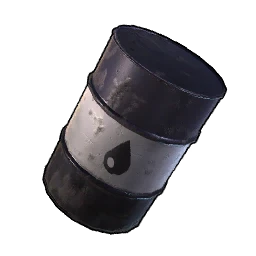 Crude Oil Crude Oil |  80 80 | pumps itself | Crude Oil Extractor, lv. 50 |
 Refined Cloth Refined Cloth | 264 | 106 | ranch + production assembly line, lv. 36 |
| Cloth | 48 | 96 | ranch + workbench, lv. 4 |
 "Precious" drops "Precious" drops | 500–1500 | — | drop from Pals |
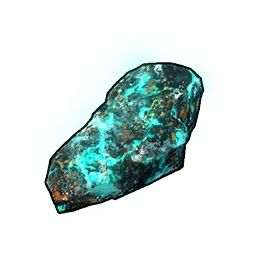 Soralite Soralite | 250 | 10 | Soralite Quarry, lv. 72 |
 Hexolite Quartz Hexolite Quartz | 100 | 5 | Hexolite Quartz Mine, lv. 62 |
 Ore Ore | 10 | 6.25 | Ore Mining Site II, lv. 39 |
 Pure Quartz Pure Quartz | 50 | 5 | Pure Quartz Quarry, lv. 52 |
 Sulfur Sulfur | 30 | 3.75 | Sulfur Quarry, lv. 46 |
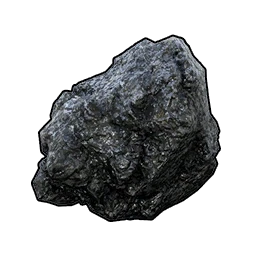 Coal Coal | 20 | 2.5 | Coal Quarry, lv. 37 |
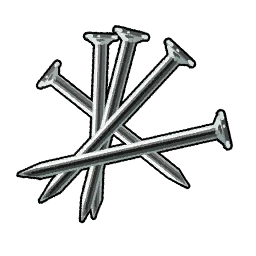 Nail Nail | 6 | 12 | workbench, lv. 10 — see below |
The third column is the gold a thousand units of Pal work brings in. For raw materials that is mining work; for cloth it is crafting only, since ranch wool grows on its own.
How the game prices things
Mechanics first, otherwise the numbers below look odd. Every item has a single base price. You pay it in full when buying and get exactly a tenth of it when selling. Cloth costs 480 at a vendor and sells for 48. No bulk discounts, no haggling.
The second rule matters more. Almost every recipe is built so the finished item is worth 20% more than the sum of its materials. Smelt two ores worth 10 each and you get an ingot worth 24. Turn ten wool and a piece of leather into refined cloth and you get 264 instead of 220. That holds across the whole crafting tree, with a handful of exceptions.
The conclusion is unpleasant but honest: processing raw materials for profit is mostly pointless. The markup is fixed while the Pal labour it burns is very real. Only recipes that are cheap in work come out ahead.
Oil: the money that arrives on its own
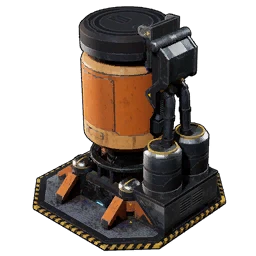
The Crude Oil Extractor at level 50 does something no other structure does: it runs without Pals. All it needs is power. The tables give it an automatic output of 120 work per second, and a barrel costs 8000 — so every 67 seconds another crude oil worth 80 gold drops into the box.
That is 54 barrels an hour, roughly 4300 gold from a single extractor while you are off clearing dungeons. Three of them make thirteen thousand an hour, and all you do is drop by occasionally to empty the crate.
Level 51 unlocks the high-pressure version; in the tables its extraction speed is identical to the basic one. Extractors only go on oil deposits, so plan the base around that income in advance.
The ranch: wool that doubles in value
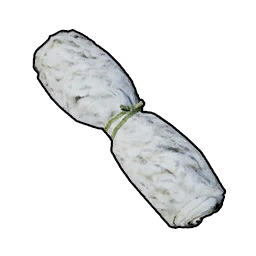
Until oil is available, the best product comes from wool. A Lamball on the ranch produces it endlessly and for free, and two wool on a workbench become cloth: 40 gold as raw material against 48 finished. The markup is the usual one, but the craft costs a laughable 500 work — per unit of labour this is the best recipe in the game, 96 gold per thousand work.
Level 36 adds refined cloth: ten wool plus leather for 264 gold, or 106 per thousand work. Leather can sit on the ranch too — Surfent provides it, so the whole line lives inside your base.
There is one real drawback: the ranch produces slowly. With a couple of Lamballs the income trickles rather than flows. On the other hand it needs no mines, no electricity and no attention from you, and it works from level four.


What to do with a mountain of ore
A classic situation: hundreds of thousands of ore sitting in a chest. What to do with it depends on what you are short of — time or the ore itself.
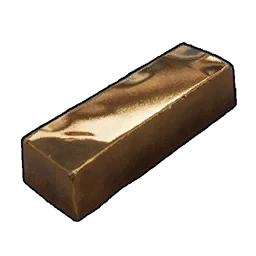
If ore keeps flowing from a mining site and you are short on hands, just smelt ingots. An ingot yields 24 gold per thousand work — half the labour cost of any alternative, and a furnace does not tie up your workbench.
If the ore is finite and you want the maximum out of it, the best option is Meowmere: 44 ore turn into 1346 gold, which is 30 coins per ore instead of ten. Two hundred thousand ore yields around six million against two million if you sell it raw. The price is a mountain of work plus 110 stone and 22 coal per unit.
Ammunition is nominally even better — shotgun shells reach 82 gold per ore — but they take thirty times the work. That only makes sense on a large base where Pals are idling anyway.
| What to do with the ore | Gold | Work | vs. selling raw |
|---|---|---|---|
| Sell the ore as is | 2.0M | — | ×1 |
 Ingots Ingots | 2.4M | 100M | ×1.2 |
| Nails | 3.0M | 250M | ×1.5 |
 Pickaxes and axes Pickaxes and axes | 3.2M | 133M | ×1.6 |
 Weight modules Weight modules | 4.0M | 230M | ×2.0 |
 Meowmeres Meowmeres | 6.1M | 383M | ×3.1 |
 Shotgun shells Shotgun shells | 16.5M | 3950M | ×8.2 |
Based on 200,000 ore, assuming you also have stone, wood and coal on hand. "Work" is the total Pal labour the whole batch takes.
Nails, hats and other traps
Before 1.0 half the playerbase mass-produced nails — back then it was a fair way to double the value of an ingot. Today a nail sells for 6 gold at a weight of 2, the worst ratio in the game: three gold per kilogram of cargo. It still squeezes 15 coins out of an ore against 12 for an ingot, but it burns twice the work doing it. There is no reason to make them purely for sale any more.
The second trap is boss cosmetics like Zoe’s Hat. The tables give it a price of 10,000 — a thousand on sale — and a recipe of a single cloth. It looks like a money printer, but you cannot craft it: the item rank is higher than any station in the game accepts. It is purely a tower reward, and the recipe is a dead leftover in the data.
And the thing most people miss: "Precious" Pal drops — Precious Dragon Stone at 1500, Precious Innards at 1250 and their smaller siblings — weigh exactly zero. They take no carry capacity, need no stations and sell for straight cash. After a hunt it is worth checking your inventory: sometimes it already holds more gold than your entire base produces.